Signs Your Commercial Distribution Board Needs Upgrading
SEO Metadata
Content Type: Blog article
Primary Keyword: commercial distribution board upgrade
Secondary Keywords: distribution board replacement, signs your fuse board needs replacing, commercial consumer unit upgrade, electrical capacity for businesses
A commercial distribution board upgrade is not the kind of project anyone looks forward to. It involves isolating power, it costs money and nobody will notice the result once the cover is back on. But the distribution board is the point where every circuit in the building is controlled and protected, and when it falls behind the demands placed on it, the problems spread to everything downstream.
This article covers the warning signs that a distribution board is reaching its limits, why business growth often forces the issue, and what an upgrade actually involves in an occupied building.
What a Distribution Board Does
The distribution board, sometimes called a DB, fuse board or panel, takes the incoming supply and divides it into individual circuits. Each circuit is protected by a device, such as a circuit breaker, RCBO or fuse, that disconnects it if something goes wrong.
In a small office there may be a single board. Larger commercial buildings usually have a main panel feeding sub-distribution boards on each floor or in each area, with separate boards for mechanical plant, kitchens or workshops.
When people talk about upgrading the board, they can mean anything from replacing one small sub-board to renewing the main panels for an entire building. The signs that something needs doing are similar at every scale, though, and a survey by a commercial electrician will tell you which level of work is justified.
Warning Signs to Look Out For
Some warning signs are obvious to anyone who walks past the board. Others only show up in inspection reports or in the pattern of faults over a year. Any of the following is a reason to have the installation checked.
Frequent or unexplained tripping
An occasional trip usually points to a faulty appliance. Regular tripping, especially at busy times of day, can mean circuits are overloaded or that leakage currents are building up across too many items of equipment on one protective device. Resetting the breaker solves nothing if the cause stays in place.
Heat, smells or discolouration
A board that feels warm, smells of hot plastic or shows scorch marks around terminals needs urgent attention. Loose connections and overloaded components generate heat, and heat damages insulation over time. Do not open the board yourself; call a competent electrician and keep the area clear.
No spare capacity
If every way in the board is used and new circuits have been squeezed in by doubling up connections or adding small boards alongside, the installation has outgrown its design. This is common in buildings that have changed tenants several times.
Outdated protection
Older boards may use rewireable fuses or have little or no residual current device (RCD) protection. Current editions of BS 7671 require RCD protection in many more situations than older editions did. An older board is not automatically unsafe, but it may not meet current standards when new work is added.
Codes on your inspection report
Periodic inspection reports classify observations with codes. If your latest report lists issues relating to the board, such as damaged enclosures, missing labelling or inadequate protection, those observations are a strong signal that an upgrade should be planned.
When Business Growth Puts Pressure on the Board
Many distribution boards are replaced not because they have failed, but because the business has changed around them. Equipment that was rare when the building was wired is now standard.
Common additions that push an existing board beyond its limits include:
- workplace EV chargers for staff, visitors or fleet vehicles
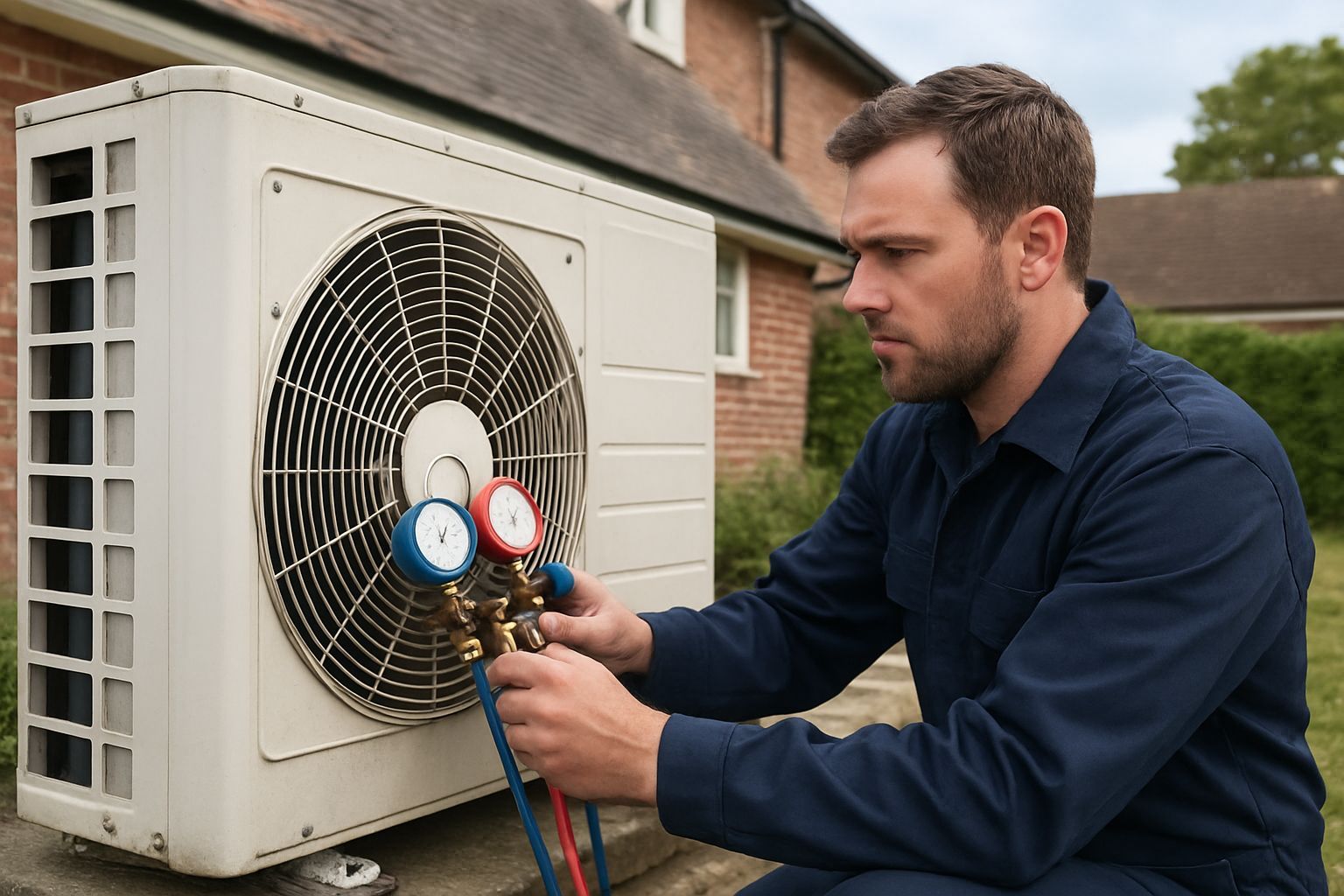
- new or expanded air conditioning and heat pump systems
- commercial kitchens, boiling water taps and catering equipment
- workshop machinery, compressors or laboratory equipment
- solar PV and battery storage systems
The last of these has its own technical considerations. Amendment 3 to BS 7671, published in July 2024, addressed the selection of protective devices where an installation has an additional source of supply, such as battery storage or solar PV. Electrical Safety First summarised the change when it came into effect. In practice, adding generation to an older board often means reviewing or replacing the protective devices as well.
Planning for growth is cheaper than reacting to it. If you know new equipment is coming in the next few years, it is worth designing the upgraded board with spare ways and capacity now, instead of returning to the same board twice.
What an Upgrade Involves
A distribution board upgrade in an occupied commercial building is mostly about planning. The physical change of the board may take hours; getting to that point safely takes much longer.
Survey and design
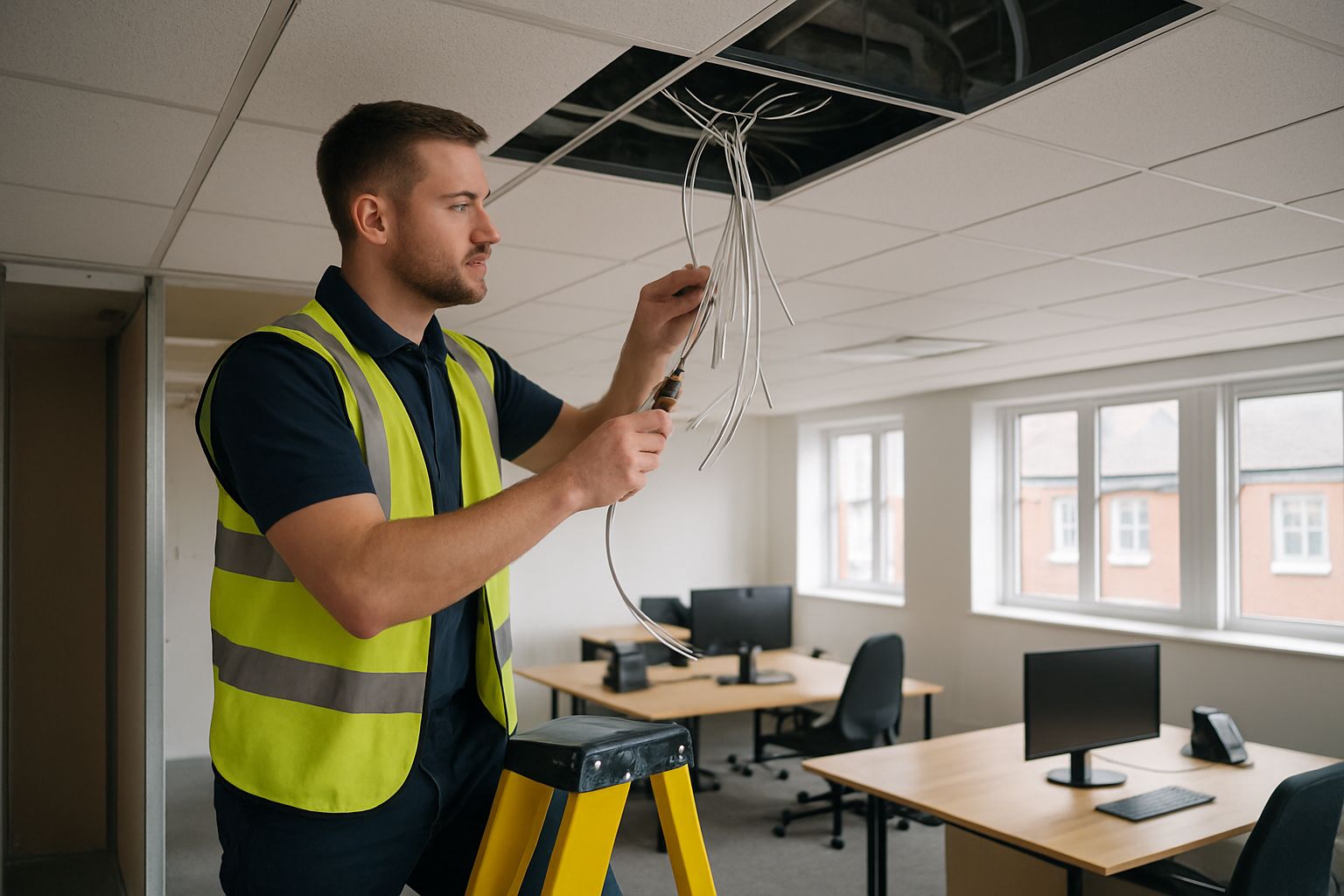
The electrician surveys the existing board, the circuits it feeds and the incoming supply. They confirm loads, check cable sizes and protective device ratings, and design the new board so it meets current standards and leaves room for growth.
Isolation and out-of-hours working
Changing a board means switching off every circuit it feeds. In a busy building, that is usually done outside working hours. When we upgraded the main distribution panels for a long-term client in Bath, the SOWGA electrical distribution upgrade was sequenced into out-of-hours windows so the building was fully operational each morning.
Testing, certification and labelling
Once the new board is installed, every circuit is tested before the building is reoccupied. You should receive electrical certification for the work, an up-to-date circuit chart and clear labelling. Good labelling sounds minor, but it saves time and reduces risk every time someone needs to isolate a circuit in future.
Planning the Cost and Timing
The cost of a distribution board upgrade depends on the size of the board, the number of circuits, the condition of the cabling and how much out-of-hours work is needed. Replacing a small sub-board is a modest job; renewing the main panels in a multi-storey building is a significant project.
The timing is often more flexible than people expect. Unless the board is showing signs of overheating or damage, an upgrade can usually be planned around quieter trading periods, building shutdowns or a wider commercial refurbishment.
It is also worth thinking about legal duties. Under the Electricity at Work Regulations 1989, electrical systems must be maintained so far as reasonably practicable to prevent danger. The HSE guidance on the Regulations explains that duty in detail. Putting off a needed upgrade indefinitely can sit uncomfortably with it.
Acting Before the Board Becomes a Problem
A distribution board rarely fails without warning. Repeated tripping, heat, a lack of spare capacity and inspection observations are all signs that it is time to plan. Upgrading on your own timetable, with a proper design and out-of-hours isolations, is far less disruptive than reacting to a failure.
If you manage a commercial building in Oxfordshire, Berkshire or Wiltshire and recognise any of these signs, Rock Building Services Group can survey your installation and recommend the right level of upgrade. Many clients combine this with a planned maintenance schedule so the installation stays in good order afterwards. Contact us to arrange a survey.
FAQs
How long does a commercial distribution board last?
There is no fixed lifespan. A well-maintained board in a clean, dry environment can last for decades, but it may fall behind current standards or run out of capacity long before it wears out. Regular inspection is the best way to judge when replacement makes sense.
Can a distribution board be upgraded without shutting the business?
The circuits fed by the board have to be isolated while it is changed, but the work can usually be scheduled for evenings or weekends. With good planning, most businesses open as normal the next morning. Critical equipment can sometimes be kept running on temporary supplies.
Do I need a new board to add EV chargers?
Not always. It depends on the available supply, the spare capacity in the existing board and the number of chargers planned. An electrician should carry out a load assessment before any chargers are ordered, as this often decides the overall cost of the project.
Is an old distribution board dangerous?
Age alone does not make a board dangerous. Heat, damage, loose connections, missing covers or inadequate protection are the real concerns. If you notice warning signs such as burning smells, scorch marks or frequent tripping, have the board inspected promptly by a qualified electrician.
Recent Posts