How Often Should Commercial Air Conditioning Be Serviced?
SEO Metadata
Content Type: Blog article
Primary Keyword: commercial air conditioning servicing
Secondary Keywords: how often should air conditioning be serviced, air conditioning maintenance for businesses, F gas leak checks, TM44 inspection
Commercial air conditioning servicing is one of those tasks that slips down the list until the first hot week of summer, when a unit fails and the office becomes unbearable by mid-morning. By then, every engineer in the region is busy and the repair costs more than the service would have done.
This guide explains how often commercial systems should be serviced, how usage changes that answer, what the law requires around refrigerant leak checks and energy inspections, and what a proper service should include.
Why Commercial Systems Need Regular Servicing
Air conditioning works by moving heat, and anything that gets in the way of that process makes the system work harder. Dirty filters restrict airflow, dust on coils reduces heat transfer and a small refrigerant leak means the compressor runs longer to achieve the same result.
The effect is gradual, which is why it is easy to miss. A system can keep cooling for months while using noticeably more electricity than it should. By the time staff notice the difference, the compressor may already be under strain.
Regular servicing also protects air quality. Indoor units recirculate room air, and neglected filters, drain trays and coils can harbour dust and microbial growth. In offices, clinics and hospitality settings such as the hotel rooms we upgraded at the Leander Club, clean equipment is part of looking after the people in the building.
How Often Should Commercial Air Conditioning Be Serviced?
There is no single interval that suits every building. Manufacturers set their own recommendations, and the right schedule depends on how hard the system works and the environment it works in. As a starting point, most commercial systems should be serviced at least once a year, with many benefiting from two visits.
Offices and general commercial spaces
In a typical office or shop where units run during working hours, an annual service is the minimum. Twice-yearly visits, one before summer and one before winter for reversible systems, are common where the system provides both cooling and heating. Filters may need cleaning more often than the full service, and staff can sometimes do this between visits if shown how.
Server rooms and critical cooling
Comms rooms, server rooms and data centres often run their cooling around the clock, all year. Failure can take systems offline within hours, so servicing is usually more frequent and backed by monitoring. When we replaced the data centre cooling for Oxfordshire hospitals, resilience was the main design priority for exactly this reason.
Kitchens, workshops and dusty environments
Grease, flour, sawdust and metal particles clog filters and coils quickly. Restaurants, bakeries, workshops and light industrial units often need quarterly servicing, or at least more frequent filter cleaning, to keep systems working efficiently.
The Legal Side: Leak Checks and Energy Inspections
Servicing is good practice, but some checks are also legal requirements. They fall on the business operating the equipment, as well as on the engineer who maintains it.
Most commercial air conditioning uses fluorinated greenhouse gases (F gas) as refrigerant. The rules on leak checking depend on how much refrigerant a system contains, measured in tonnes of CO2 equivalent rather than kilograms.
Larger systems also trigger energy inspection requirements. These are separate from servicing and must be carried out by an accredited assessor.
F gas leak checks
According to the GOV.UK guidance on checking F gas equipment for leaks, equipment containing 5 tonnes CO2 equivalent or more must be leak checked at least every 12 months, rising to every 6 months from 50 tonnes. For R410A, a common refrigerant in older systems, 5 tonnes is about 2.4 kg of gas. Fitting a leak detection system can extend the interval, and anyone carrying out the checks must hold the appropriate F gas qualifications.
TM44 energy inspections
Buildings with air conditioning totalling more than 12kW of effective rated output must have the system inspected by an accredited energy assessor at intervals of no more than five years. The requirement comes from Part 4 of the Energy Performance of Buildings (England and Wales) Regulations 2012. The 12kW figure applies to the combined output, so several smaller units in one building can together bring it into scope.
Keeping records
Keep records of every service, leak check and inspection, including dates, results and who carried out the work. These records are often requested by insurers, landlords and auditors, and they make it far easier to spot a system that is losing refrigerant over time.
What a Proper Service Should Include
A service visit should be more than a filter clean and a sticker on the unit. The exact checklist depends on the equipment, but a thorough commercial service typically covers:
- cleaning or replacing filters and checking airflow
- cleaning indoor and outdoor coils
- checking and clearing condensate drains, trays and pumps
- checking refrigerant pressures and temperatures for signs of leaks
- inspecting electrical connections, controls and safety devices
- testing operation in cooling and, where fitted, heating mode
- recording findings and recommending any repairs
Ask for a written report after each visit. A short report listing what was checked, what was found and what needs attention gives you a clear history for every unit and helps plan replacement before a system fails completely.
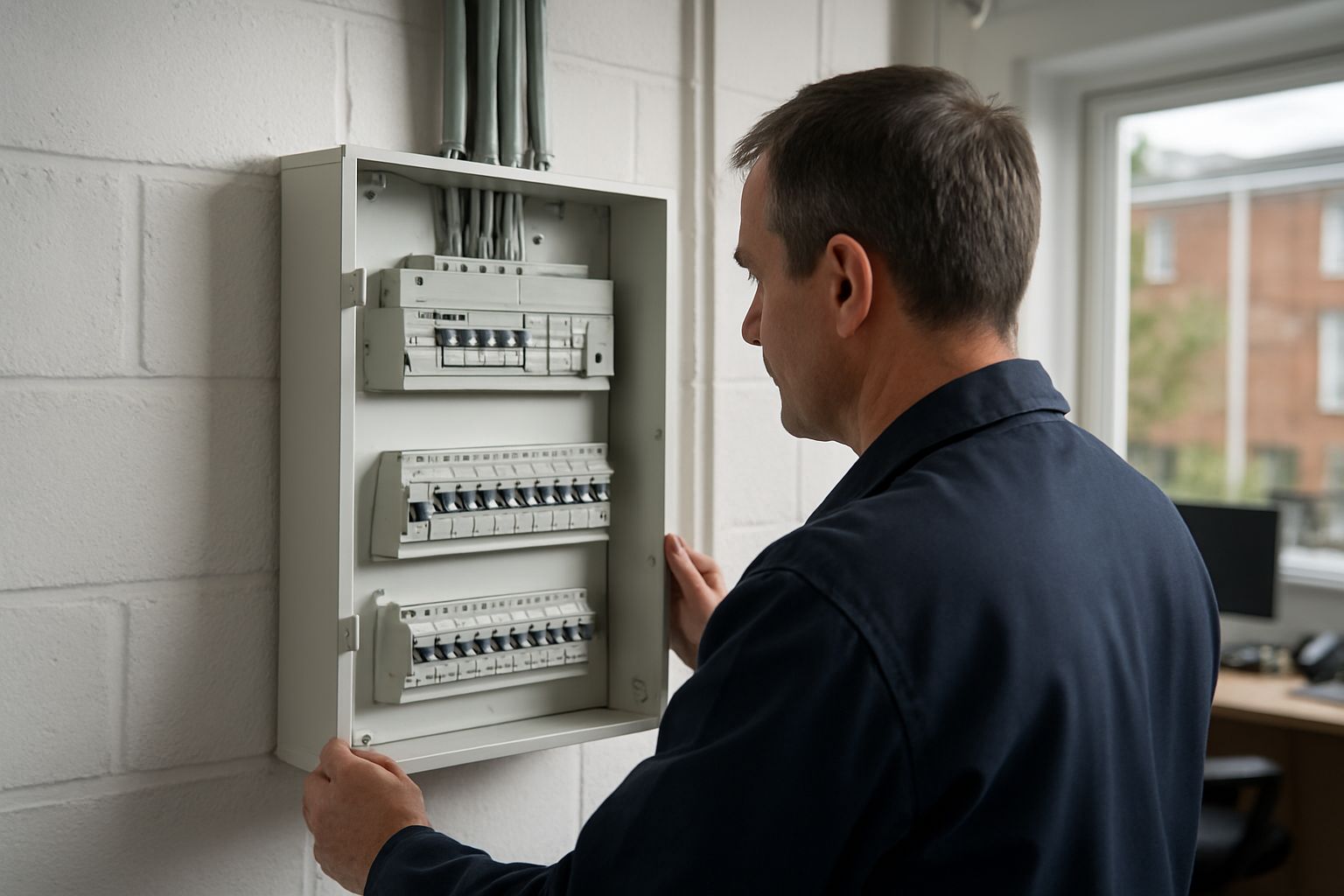
Electrical checks are easy to overlook. Air conditioning units draw significant current, and loose or overheated connections are a common cause of breakdowns. A contractor with in-house electrical engineers can deal with supply issues on the same visit.
Signs Your System Needs Attention Between Services
Even with a schedule in place, problems can develop between visits. Weak airflow, rooms that never reach the set temperature or units that run constantly are all early signs of trouble.
Water dripping from indoor units usually means a blocked condensate drain, and it can damage ceilings, flooring and equipment below. Unusual noises, such as rattling, grinding or hissing, can point to loose parts, fan problems or refrigerant leaks.
Ice on pipework, musty smells and units that trip their electrical supply are also worth reporting promptly. Catching these issues early usually means a cheaper repair and avoids a breakdown at the worst possible time.
Building a Servicing Schedule That Fits
Most commercial air conditioning should be serviced at least once a year, with more frequent visits for systems that run continuously or work in harsh environments. On top of that, leak checks and energy inspections may be legal requirements depending on the size of your systems. Putting all of this into one schedule is the easiest way to stay efficient and compliant.
Rock Building Services Group has worked on commercial air conditioning since 2000, when the business started as an HVAC specialist. We can service your existing systems, work out which leak check and inspection rules apply, and set up a planned maintenance schedule for every unit in your building. Visit our air conditioning services page or contact us to book a visit.
FAQs
Is servicing commercial air conditioning a legal requirement?
Routine servicing itself is not set in law, but related checks are. F gas leak checks are required for systems above certain refrigerant thresholds, and buildings with more than 12kW of air conditioning need an energy inspection at least every five years. Regular servicing is the practical way to meet these duties.
How long does a commercial air conditioning service take?
A single split unit can usually be serviced in under an hour. Larger buildings with multiple indoor units, or systems that need leak checks and reports, may take most of a day. Your engineer should give you an estimate before the visit so you can plan access.
Can we clean the filters ourselves?
In many cases, yes. Staff can often be shown how to remove and clean washable filters safely between professional visits, which helps maintain airflow. Coil cleaning, refrigerant checks and electrical work should be left to qualified engineers.
What happens if we skip a service?
Usually nothing dramatic at first. Efficiency drops, energy bills rise and wear builds up until a component fails, often during hot weather when demand is highest. Skipping legally required leak checks or inspections can also leave the business exposed to enforcement action.
Recent Posts